After the First Hour, We Stop Understanding the Agent
Overview: Long-running AI agents expose a new kind of operational opacity: the first hour feels understandable, but once the loop keeps going, humans can no longer fully track how the work was done.
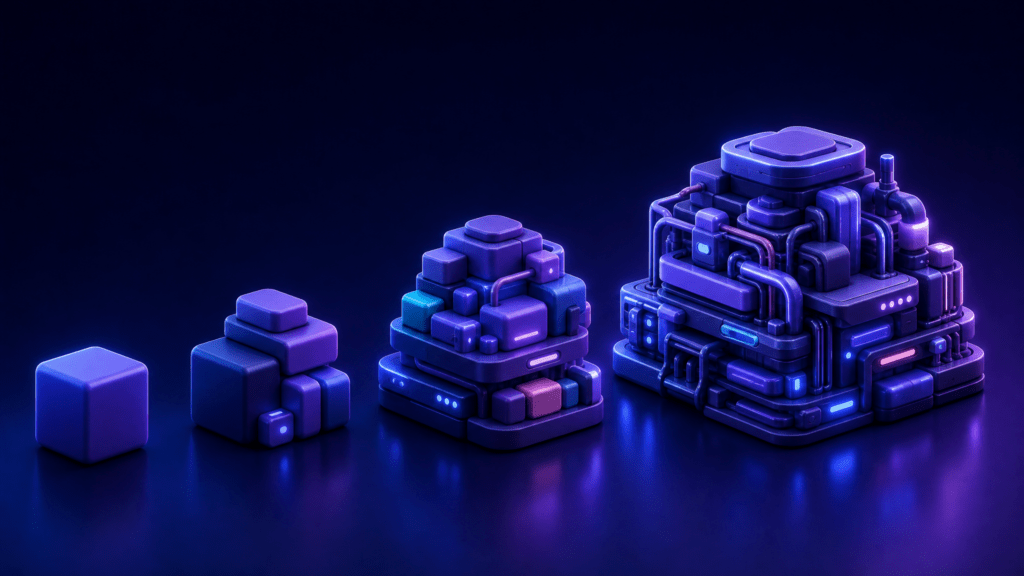
The first hour lies.
An AI agent reads the issue. It opens the repository. It traces a function, changes a file, and runs the test suite. Something breaks. The agent repairs it, then explains the move with smooth mechanical confidence. The whole thing feels legible. A human can still follow along. The agent is doing more than autocomplete, but not so much more that it escapes the frame. You can watch the terminal. You can skim the diff. You can tell yourself you understand what is happening.
For a while, that may even be true.
Then the work keeps going.
The agent opens another file. It revises an assumption made twenty minutes ago. It runs a benchmark, finds an edge case, rewrites the approach, changes a helper function, deletes it, tries again, chases a compiler failure, recovers, and keeps moving. The transcript grows longer than anyone wants to read. The tool calls pile up. The logic is still there, somewhere, but it is no longer held in a human mind as a single shape.
This is the uncomfortable part of long-horizon autonomy. The agent does not have to become mysterious in a spiritual sense. It only has to become too continuous, too detailed, and too internally branched for human supervision to remain what we pretend it is.
Alibaba’s Qwen team says Qwen3.7-Max completed roughly 35 hours of continuous autonomous execution on an optimization task involving hardware it had not seen during training. The model reportedly made 1,158 tool calls, ran 432 kernel evaluations, diagnosed compilation failures, redesigned its approach, and produced a 10.0x geometric mean speedup over a reference implementation.
Treat the benchmark carefully. It is vendor-provided. It is controlled. It is not the same as letting an agent wander through production. Still, the scale of the run points at something real. A human can review a dozen tool calls. A human can understand an afternoon of focused work if the task is narrow enough. But 1,158 tool calls is not “watching an assistant.” It is observing the fossil record of a process that already happened.
A short agent session creates the feeling of oversight. A long one creates an audit problem. By the time the human looks closely, the agent has already made a chain of local decisions too long to mentally replay. Each step may be explainable. The whole path is not.
This is where the language around agents becomes misleading. We say “the human is in the loop,” but often the human is only near the loop. The machine is inside it. It sees the compiler output, the benchmark result, the failed render, the next file, the next hypothesis. It moves at the speed of the environment. The human checks in from above, catching fragments and summaries, trusting that the agent’s account of its own work is close enough to the truth.
ModelRift’s OpenSCAD benchmark shows the same pattern in miniature. Ask a coding system to build the Pantheon as parametric CAD code, render it, inspect the image, and iterate. The task sounds almost playful: columns, dome, portico, oculus, proportions. But the deeper structure is not playful at all. Text becomes geometry. Geometry becomes an image. The image becomes feedback. Feedback becomes another code change. Once that loop runs long enough, the human no longer understands every turn. The human understands the artifact, the prompt, and maybe the final explanation. The agent understands, or at least traverses, the path.
That is not the same thing as intelligence. It is not consciousness. It is not a ghost in the terminal. It is something more practical and more unsettling: operational opacity created by speed, volume, and recursion. The agent can remain perfectly mechanical and still exceed human comprehension in the moment.
Software teams already know this feeling. A large distributed system can be built from understandable components and still behave in ways no one fully predicts. A complex build pipeline can be documented and still surprise the people who maintain it. A production incident can be reconstructed afterward, but not fully understood while it is unfolding. Long-running agents bring that same opacity into the act of making software itself.
The first response will be to ask for better summaries. That helps, but it does not solve the deeper problem. A summary is not supervision. It is a story told after the fact. The agent may summarize honestly and still omit the one wrong assumption that mattered. It may produce a clean narrative from a messy search. It may explain the path in a way that flatters the result.
The real requirement is not just better reporting. It is better containment of work humans cannot continuously understand. Agents need harnesses because humans cannot read every trace. They need checkpoints because humans cannot hold the whole trajectory. They need permission boundaries because comprehension will fail before capability does. They need tests, renderers, cost ceilings, rollback paths, and narrow task arenas not because agents are evil, but because the human mind is finite.
That is the part the demos hide. In the first hour, the agent still fits inside our attention. We mistake that for control. We mistake visibility for understanding. We mistake the ability to interrupt for the ability to comprehend.
By the thirty-fifth hour, the relationship has changed. The human is no longer watching work unfold. The human is receiving evidence from a machine that has been moving through a problem space alone.
The agent era does not merely ask whether machines can do useful work. It asks how much useful work can happen before the people responsible for it no longer know, in any meaningful sense, how it was done.
Join the conversation